Ten weeks between rooms.

The practical student storage guide

Exams finish in November. The next residence opens at the end of January. A look at what to do with a room’s worth of things instead of flying it home.

The summer gap

One academic year,
two room keys.

The end of the examination period and the start of the next year are a long way apart, and residence rooms do not stay yours in between.

01 / Final examinations end20
Nov

The last day of UCT’s November examination period in 2026.

02 / Residences open again31
Jan

When UCT residences opened for the 2026 academic year.

That is roughly ten weeks with nowhere to put a room.

Long enough that flying it home, or paying for a room you are not living in, starts to look expensive.

What goes in

A room fits in
less than you think.

Most of a residence room is four categories, and none of them need to travel home.

Bedding, kitchen kit and clothes

The bulky, cheap things that cost more to replace each year than to keep.

Books, notes and equipment

Course material you will want again, and the laptop stand nobody wants to courier.

The bike, the board, the gear

Sports equipment that will not fit in a suitcase and will not survive a bus.

Furniture you actually bought

Desk, chair, small fridge — the things that make a digs liveable and are a waste to sell each December.

A student packing boxes at the end of term

Who it suits

Mostly people whose home
is not in Cape Town.

If you can drive it back to a garage an hour away, you probably do not need this page.

Students from other provinces

Flying or driving a room’s worth of things to Gauteng and back twice a year rarely makes sense.

International students

Going home for the summer without paying excess baggage on a duvet and a kettle.

Between digs

A lease that ends in November and one that starts in February, with a gap nobody wants to pay rent for.

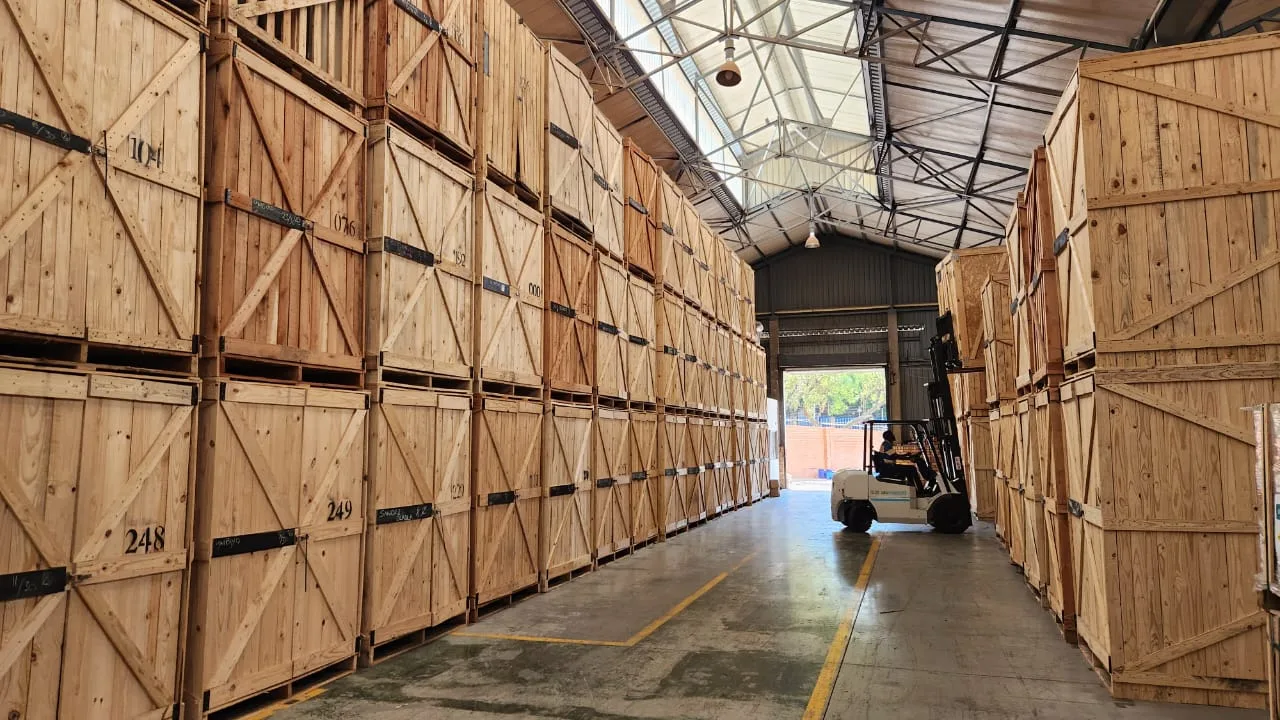
Wooden storage pods stacked inside the Cape Storit warehouse
The calendar

The dates that
drive the decision.

These are UCT’s 2026 dates. Stellenbosch, CPUT and the private institutions all run slightly differently, so check your own calendar before booking anything.

16–23 JunThe mid-year vacation — short, and usually not worth storing for
4–20 NovThe November examination period
~10 weeksFrom the end of exams to residences reopening

UCT 2026 academic calendar — see Sources. Other institutions differ.

Your plan

What to do, and when.

Four things, none of which need doing during exams.

01 / OCTOBER

Decide what travels

Split the room into what goes home, what goes into storage and what you are genuinely finished with.

02 / BEFORE EXAMS

Book the space

Everyone in your residence has the same deadline. Booking before the exam period is easier than booking during it.

03 / THE LAST WEEK

Pack and label

Label by category, not by room. In February you will be looking for the kettle, not for “room 212”.

04 / JANUARY

Get it back before orientation

Arrange the return for the week residences open, not the week classes start.

Two ways to do it

Storage that fits
a student budget.

Share a unit with friends and keep your own key, or have a pod collected from residence and brought back in January.

Drive-up self storage units at a Cape Storit site

Self storage

  • Your own unit, your own key
  • Easy to share between a few of you
  • Paarden Eiland, Parow and Woodstock
Explore self storage ↗
A Cape Storit wooden storage pod being loaded

Valet storage pods

  • We collect from your door and bring it back
  • From R750 per pod, per month
  • No car, no trailer, no lift required
Explore valet storage ↗

Customer experience

People who have
made the move.

From people who stored with us.

G★★★★★ 4.8 from 144 Google reviews

★★★★★

The easiest and quickest move in I’ve ever had!! The staff are incredible, so helpful and sweet and the move in process was as easy as can be!

JJustine BrinkPaarden Eiland · Review on Google

★★★★★

They came to my house and assisted in loading the units and transporting them to their facilities, very easy and convenient. They are easy to communicate with and give great service.

MMoneen BooyseJohannesburg · Review on Google

★★★★★

...the pod access and availability to wait after hrs during my move on Sat 29 Aug... was truly appreciated. The cost was also way more reasonable than other storage places.

CColette ApollesMaitland · Review on Google

★★★★★

The whole process, from booking to moving my things in, was easy and straightforward. The facility feels secure, and access has always been hassle-free.

SSelina EichelbrönnerMaitland · Review on Google

★★★★★

My son is studying in Cape Town and he moved out of a student house at the end of November, and we had to store his things until we found him a new place in February... their rates were considerably lower than other places I requested quotes from.

SSonne GerberMaitland · Review on Google

★★★★★

Since my first interaction with Ameerah, she made sure my storage unit was booked immediately and maintained clear communication until I moved in. The access is simple and secure—highly recommended!

OOdile FransmanWoodstock · Review on Google

Student Storage: Common Questions

How much space does a residence room need?

Usually much less than people expect. A pod holds six cubic metres — about the contents of a small one-bedroom flat — so a single residence room generally fits with room to spare, and often two or three rooms will share one.

Can I share a unit with friends?

Yes, and most students do. One person holds the contract and the others pay them. Label everything by name as well as by category, and photograph the unit once it is packed.

How long can I store for?

As long or as short as you need. Rental is month to month with two weeks’ notice, so a ten-week summer is straightforward and so is a semester abroad.

Is there a deposit?

No. Cape Storit does not take a deposit at any of our sites.

What does it cost?

Valet pods are R750 per pod, per month. Drive-up self-storage units are priced by size and site — ask us and we will quote on what you actually need.

I do not have a car. Can you collect?

Yes. The valet service brings a wooden pod to your residence or digs, loads it and takes it to our Maitland warehouse. It comes back to your door when you need it.

Can I get to my things over the holidays?

A drive-up unit is yours to visit during your site’s access hours. For valet pods, give us notice and we will have your pod ready at the front.

Are my things insured?

Cape Storit does not provide insurance coverage for the goods stored inside your unit. While we insure the storage facility itself, it is your responsibility to obtain insurance coverage for your stored belongings. We highly recommend that you secure insurance coverage to protect your goods against potential risks or damage. Please consult with your insurance provider to explore suitable options for insuring your stored items.

What can’t I store?

Hazardous, illegal and perishable items are not allowed. Empty and dry the kettle and the bar fridge before they go in.

What if my dates change?

Tell us and we will move the booking. Results, resits and flights all move.

In more detail

The long version.

What the academic calendar actually looks like, why the summer gap is the expensive one, and how to share a unit without it going wrong.

The shape of the academic year

Two vacations, one of them long

UCT’s 2026 calendar ran a mid-year vacation from 16 to 23 June and a November examination period from 4 to 20 November, with the summer term ending on 18 December and the end-of-year vacation running to 31 December. Residences had opened for the year on 31 January.

Only one of them is a storage problem

A week in June is not worth moving a room for. The stretch between the end of November examinations and residences reopening at the end of January is a different matter — call it ten weeks, and in most residences you cannot leave anything behind.

Check your own calendar. These are UCT’s 2026 dates. Stellenbosch, CPUT and the private institutions publish their own, and they do not line up exactly.

Why flying it home rarely adds up

The maths is mostly bulk, not weight

The things that fill a residence room are bulky and cheap: bedding, a kettle, a desk lamp, winter clothes, a year of course material. None of it is worth excess baggage, and replacing it every February is a real annual cost that nobody budgets for.

The question is not whether your things are worth keeping. It is whether they are worth carrying 1,400 kilometres twice a year.

Sharing a unit

It works, with one rule

Splitting a drive-up unit between three or four people is the cheapest way most students do this. The rule that makes it work is that one person holds the contract and everyone else pays them — not four people with a vague arrangement and one key.

Label by owner as well as category

Boxes that only say “kitchen” become an argument in February. Put a name on everything, and take a photograph of the unit when it is packed.

Cape Storit does not insure the goods stored inside a unit. If you are sharing, be clear between yourselves about who is covering what.

References

Sources

Dates were correct at the time of writing, September 2026, and are UCT’s unless stated. Academic calendars change — check your own institution before booking anything.

Ready when term is

Leave it here,
not at home.

Tell us roughly what is in the room and when you need it back. We’ll size it before you pay anything.

Chat about the summer ↗Or work out the space with the storage calculator.